What File Format Do You Need for Custom Dress Printing?
Learn which print artwork formats are best for custom printed dress production and what a factory checks before sampling.
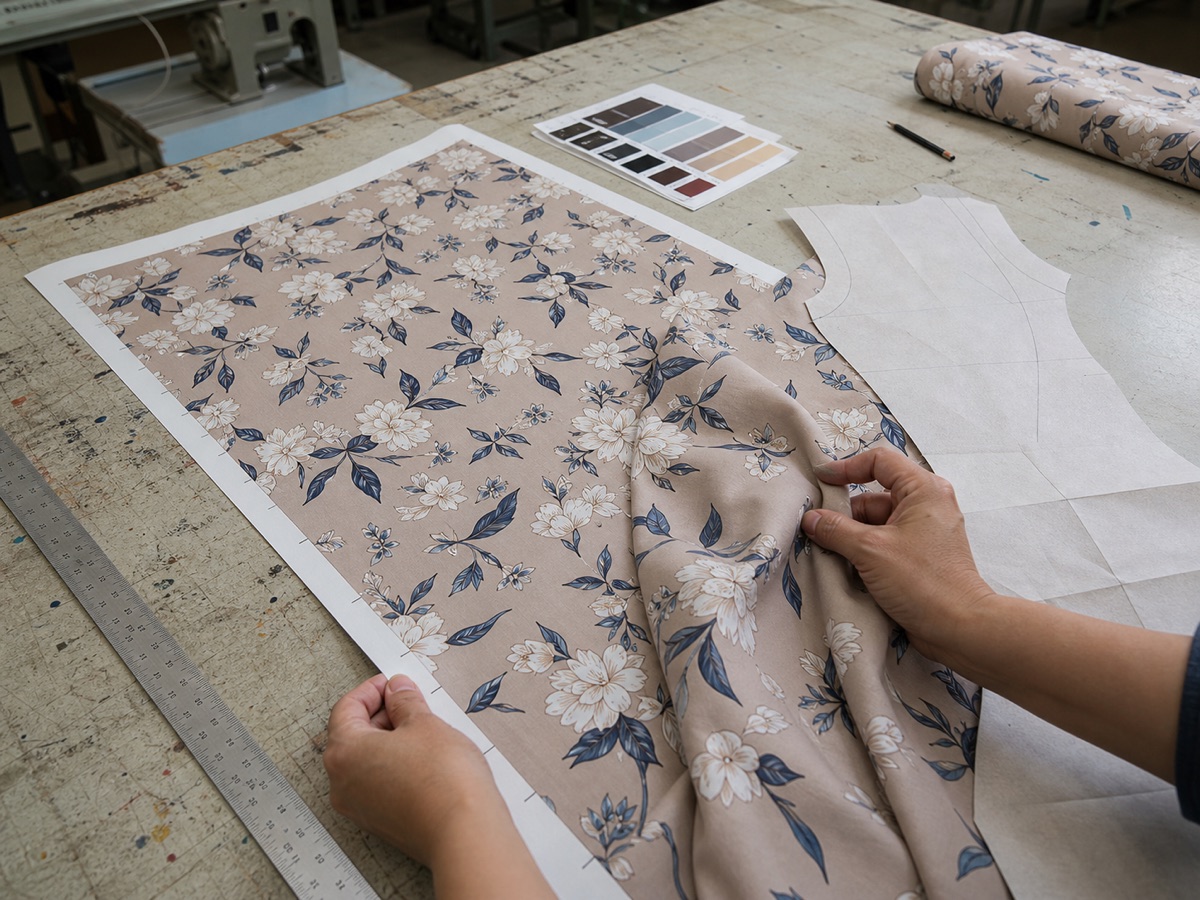
Start with the strongest file you have
For custom dress printing, the best files are usually AI, PSD, PDF, high-resolution PNG, or high-resolution JPG files. A seamless repeat file is ideal for all-over prints, but many brands begin with a reference image, AI-generated artwork, or a rough design direction. That can still be useful for the first review as long as the limitation is clear.
The file format is only one part of the decision. The factory also needs to review resolution, repeat quality, print scale, color direction, and whether the artwork suits the garment shape. A high-resolution image may still fail if the repeat is broken, the motif is too large, or important elements fall across seams and openings.
AI-generated artwork can be a strong starting point, especially for color and mood, but it often needs production review. Some AI images are not seamless, some contain fuzzy details, and some work only as a reference rather than a direct print file. If you have an AI image, upload it with your target dress type and quantity so the next step can be judged.
If your artwork is intended for a long dress, abaya, kaftan, or resort maxi, include the garment direction when you send the file. The same artwork can require different preparation depending on where it lands. An all-over print needs repeat review, while a placement print needs a garment map, seam awareness, and scale checks on the actual reference shape.
Check repeat, scale, and placement
Placement prints need special attention. A border print on a kaftan or abaya may need neckline, sleeve, hem, and side seam alignment. A print that works on a square scarf may not automatically work on a long dress pattern. Before sampling, the artwork should be checked against the requested style or reference cut.
For brands without a final file, the best action is to upload what you have and explain the product goal. Alohamiss can tell you whether the file can be reviewed directly, whether it needs adjustment, or whether it should be recreated before sampling. A reference image is enough to start a conversation, but it may not be enough for final production.
When submitting artwork, include any important color expectations, repeat direction, placement preference, fabric idea, size range, and private label requirements. These details help avoid a weak quotation and let the factory respond with practical sample planning instead of a generic price.
Do not worry if the first file is imperfect. The first review is meant to identify the correct next step. Sometimes the next step is sample quotation. Sometimes it is artwork cleanup, repeat rebuilding, scale adjustment, or choosing a different fabric. A clear file review prevents the brand from paying for a sample that cannot answer the right production questions.
Send enough context for a useful review
A good file submission also reduces quoting confusion. If the factory knows the print direction, target garment, country, quantity, and private label needs, it can respond with a more realistic sample plan. If those details are missing, the reply may be limited to broad guesses that do not help the brand move forward.
For private label projects, keep artwork ownership clear. Alohamiss reviews customer-supplied artwork for production planning, but the brand should confirm it has the right to use the design. This is especially important when using references, AI-generated images, or artwork adapted from another source.